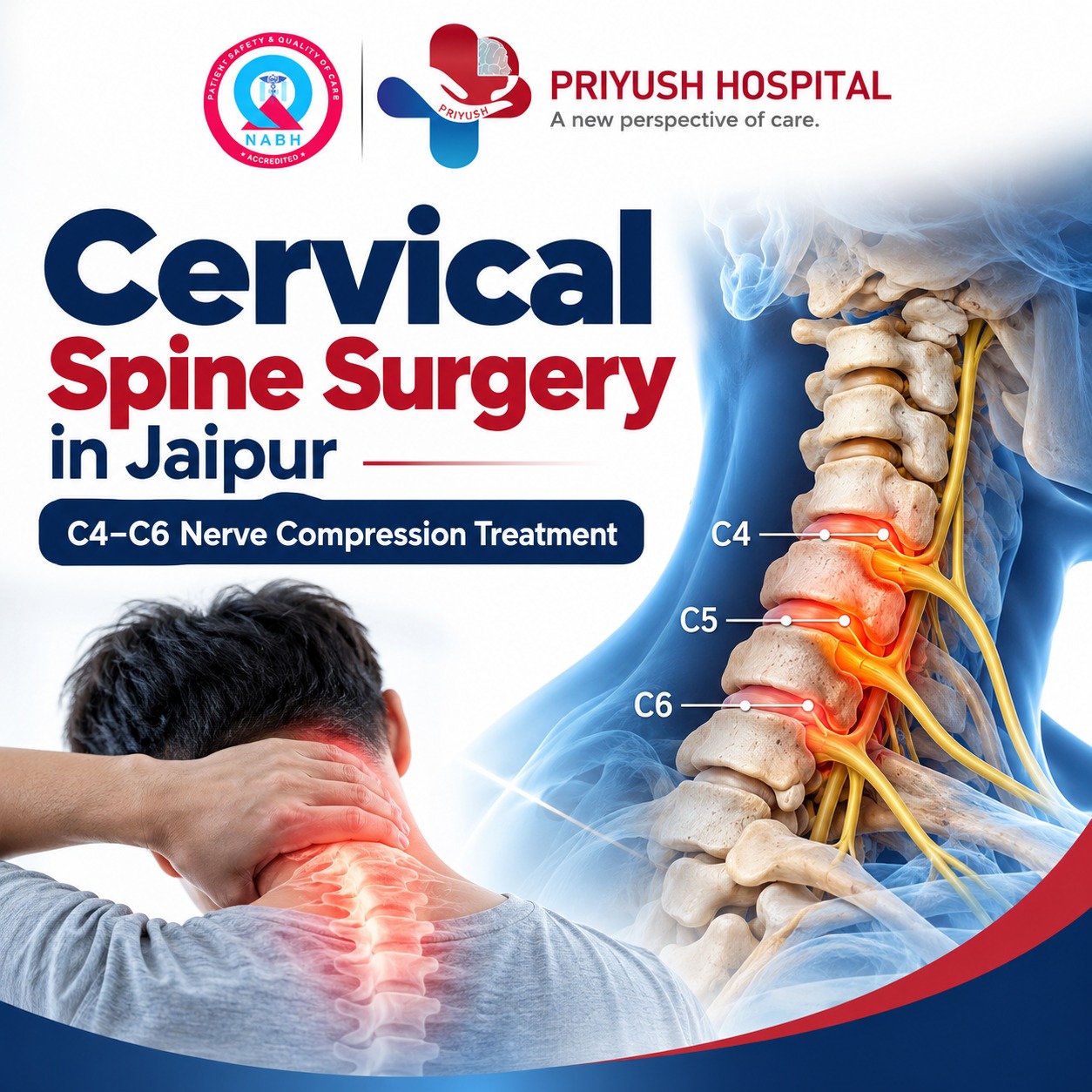
I have seen patients experience neck pain, tingling in the hands, numbness, and weakness in the arms. These symptoms can signal a problem with the cervical spine, often when a spinal disc or surrounding structures press on nearby nerves. While some cervical spine conditions improve with non-surgical treatment, others may require specialised medical evaluation and surgery.
When neck pain or nerve compression symptoms persist, timely assessment can help identify the underlying cause and guide appropriate treatment. Cervical spine surgery in Jaipur may be an option for patients who need surgical intervention after a thorough medical evaluation.
At Priyush Neuro & Super Speciality Hospital, Jaipur, patients can seek evaluation for brain, spine, and neurological conditions. For those searching for the Best Spine Hospital in Jaipur, the hospital provides access to specialist spine care. A patient testimonial featuring Banwari Lal Saini and Dr. Yogesh Gupta highlights a treatment journey involving C4–C6 cervical spine nerve compression.
Understanding the Cervical Spine and C4–C6 Nerve Compression
I have read that the cervical spine is the part of the backbone that sits in the neck area. The cervical spine has seven vertebrae, named C1 to C7. The cervical spine bones hold up the head, let the neck move and guard the spinal cord.
Between the spine vertebrae lie intervertebral discs that soak up pressure and give the cervical spine flexibility. Nerves branch out from the spine and send signals between the brain, spinal cord, shoulders, arms and hands.
The C4, C5 and C6 levels of the spine are key to neck movement and to the nerve pathways that feed the shoulders and arms. Problems that hurt the spine discs, joints or nearby structures can sometimes press on nerves close by. Consulting specialists at the Best Spine Hospital in Jaipur lets patients learn about their spine condition and find good treatment options after a thorough medical check.
What Causes C4–C6 Nerve Compression?
Several conditions may contribute to cervical nerve compression, including:
-
Cervical disc herniation: A spinal disc may bulge or herniate and press against a nearby nerve.
-
Age-related changes: Discs may lose hydration and flexibility over time.
-
Cervical spondylosis: Wear-and-tear changes can contribute to narrowing around the nerves.
-
Bone spurs: Extra bone growth may reduce the space available for nerve roots.
-
Spinal canal narrowing: A reduced space around the spinal cord can cause symptoms in some patients.
The exact cause can be different for each person. An MRI result, by itself, doesn't always mean surgery is needed. Doctors need to look at whether the imaging matches what the patient is actually feeling and what they show during the exam.
Common Symptoms of Cervical Nerve Compression
Cervical nerve compression can cause different symptoms depending on which nerve or spinal structures are affected.
Neck Pain and Stiffness
Some people experience persistent neck pain, stiffness, or discomfort while turning or moving the head. Symptoms may worsen with particular movements or positions.
Pain Radiating to the Shoulder or Arm
When a cervical nerve root is irritated or compressed, pain may travel from the neck towards the shoulder, arm, or hand. This is sometimes called cervical radiculopathy.
Tingling and Numbness
Pins-and-needles sensations or reduced sensation in the arm or fingers may occur when nerve function is affected.
Arm or Hand Weakness
Some patients experience weakness in particular muscles, difficulty gripping objects, or problems performing routine activities.
Balance and Walking Difficulties
If the spinal cord is compressed the spinal cord can cause symptoms such, as hand clumsiness, difficulty walking or balance problems. Those symptoms need medical assessment.
When to seek medical attention: Weakness in the arms or legs, trouble walking or loss of balance needs quick medical attention. If there is severe weakness or any symptoms that look like a stroke it must be treated as an emergency.
Patient Treatment Journey: Banwari Lal Saini
The patient testimonial video, called Cervical Spine Surgery Success Story C4–C6 Nerve Compression Treatment Dr. Yogesh Gupta shows Banwari Lal Saini and Dr. Yogesh Gupta.
The patient testimonial video focuses on spine problems in the C4–C6 area and shows the patient’s treatment journey with cervical spine surgery. The patient testimonial video also shows images in the discussion.
Patient stories can help others understand why specialist evaluation matters when spinal problems are suspected. However, every patient’s condition is different. Symptoms, MRI findings, general health and response to treatment all influence decisions.
The video information does not give every detail of the patient’s symptoms the exact surgical procedure or the recovery timeline. These details should not be assumed. Anyone with symptoms should get an individual assessment instead of using another patient’s experience to decide whether surgery is needed.
How Doctors Diagnose Cervical Spine Problems
Accurate diagnosis is an important step before recommending Cervical Spine Treatment in Jaipur or elsewhere. The aim is to identify the source of symptoms and determine whether nerves or the spinal cord are affected.
1. Medical History and Clinical Examination
A doctor may ask when the symptoms started, where the pain travels if there is numbness or weakness and how the symptoms affect activities.
The examination may include checking muscle strength, feeling, reflexes, neck movement, coordination and walking ability if needed.
2. MRI Scan
Magnetic resonance imaging, known as MRI, gives pictures of the spinal discs, nerves, the spinal cord and nearby soft tissues. MRI can show disc herniation, nerve compression and narrowing of the spinal canal.
MRI results should be read together with symptoms and exam findings because some people have age?related changes that cause no symptoms.
3. Additional Investigations
Depending on the suspected condition, doctors may recommend X-rays, CT scans, or nerve conduction studies and electromyography. These tests can provide additional information when clinically necessary.
The combination of clinical assessment and appropriate investigations helps the specialist develop a treatment plan tailored to the patient.
Treatment Options for C4–C6 Nerve Compression
Treatment depends on the cause and severity of compression, the symptoms present, and whether there is evidence of nerve or spinal cord dysfunction.
Non-Surgical Treatment
For many patients without progressive neurological problems, initial treatment may include:
-
Prescribed medication to manage pain or inflammation, when appropriate.
-
Physiotherapy and guided exercises suited to the diagnosed condition.
-
Adjustments to daily activities and posture.
-
Follow-up assessments to monitor symptoms and neurological function.
Patients should avoid self-medicating or starting forceful neck exercises without professional advice, particularly when significant nerve compression is suspected.
When Is Cervical Spine Surgery Considered?
Surgery may be considered when symptoms stay severe after proper non?surgical treatment, when there is worsening neurological weakness or when spinal cord compression puts the patient at risk of more damage. I understand how scary these choices can feel. Consulting the Best Spine Surgery Hospital in Jaipur can help patients understand their condition and explore treatment options.
Choosing the procedure depends on where the compression is, why it is happening, how stable the spine is and the patient’s overall health.
Possible procedures for cervical spine conditions include anterior cervical discectomy and fusion (ACDF) cervical disc replacement or posterior decompression procedures. These operations are not interchangeable. The specialist must decide the best approach.
The purpose of surgery is to relieve pressure on the nerve structures where it is needed. The expected benefits, possible complications, alternatives and recovery steps must be discussed with the specialist before surgery.
The Role of Dr. Yogesh Gupta in Cervical Spine Care
Dr. Yogesh Gupta is featured in the patient testimonial as the neurosurgeon associated with the patient's cervical spine treatment journey.
A neurosurgeon evaluates disorders involving the brain, spinal cord, and nerves. In cervical spine cases, the specialist considers the clinical examination, imaging findings, severity of symptoms, and suitability for surgical or non-surgical management.
Choosing the right specialist involves more than searching for the Best Neurosurgeon in Jaipur. Patients should consider the doctor's relevant experience, the proposed treatment, the risks and benefits explained during consultation, and the availability of appropriate follow-up care.
A second opinion may also be helpful when patients are uncertain about a recommended procedure or wish to understand alternative treatment options.
Cervical Spine Surgery in Jaipur at Priyush Neuro & Super Speciality Hospital
Priyush Neuro & Super Speciality Hospital in Jaipur offers neurosurgical services, including checking for brain and spine conditions.
People looking for a Spine Surgery Hospital in Jaipur should find a place where symptoms are looked at closely, test results are checked and treatment choices are talked about based on what each person needs.
The hospital's spine care services are useful for people who need to see a doctor about neck spine problems. During the visit patients can talk about their symptoms, tests, possible ways to treat the problem and if more tests or a specialist is needed.
Before having surgery it is important to know what the surgery will do, what the good parts of it are, what the bad parts might be options that are available and what the recovery process will be, like.
The aim of care is to help each patient make a smart choice based on their own health situation instead of thinking that one treatment works for everyone.
Recovery and Rehabilitation After Cervical Spine Surgery
Recovery varies according to the procedure performed, the severity of the original condition, and the patient's general health. Some people resume certain daily activities relatively early, while others need a longer period of rehabilitation.
Follow Post-Operative Instructions
Patients should follow the surgeon's guidance regarding wound care, medication, neck support, lifting restrictions, driving, and returning to work. Instructions may differ depending on the type of surgery.
Attend Follow-Up Appointments
Follow-up visits allow the treating team to assess healing, review symptoms, and identify complications. Patients should report new or worsening pain, fever, wound discharge, or other concerning symptoms.
Resume Activities Gradually
Walking and other approved activities may support recovery. Physiotherapy or specific exercises should begin only when recommended by the treating team.
Watch for Warning Signs
New or worsening weakness, difficulty walking, loss of coordination, or problems controlling bladder or bowel function require urgent medical attention. Difficulty breathing or swallowing after cervical surgery also requires immediate assessment.
Patients should remember that surgery does not guarantee complete symptom resolution. Recovery and improvement depend on several individual factors, including the nature and duration of nerve damage.
Conclusion
Cervical nerve compression involving the C4–C6 region can affect neck movement, arm sensation, muscle strength, and daily activities. Early assessment helps identify the underlying problem and determine whether medication, physiotherapy, monitoring, or surgery is appropriate.
For patients exploring Cervical Spine Surgery in Jaipur, Priyush Neuro & Super Speciality Hospital offers a setting to seek specialist evaluation for spine-related conditions. Dr. Yogesh Gupta is featured in the hospital's patient testimonial video about C4–C6 nerve compression treatment.
If you have persistent neck pain, tingling, numbness, or arm weakness, consult a qualified medical professional for an individual assessment. Timely evaluation can help you understand your condition and make informed decisions about your treatment.
Frequently Asked Questions
1. What is C4–C6 nerve compression?
C4–C6 nerve compression refers to pressure affecting nerve structures associated with the cervical spine around these vertebral levels. Depending on the exact location, it may cause neck pain, arm pain, tingling, numbness, or weakness.
2. Is cervical spine surgery always necessary for nerve compression?
No. Many patients can initially be managed without surgery. An operation may be considered when symptoms are severe or persistent, neurological function is worsening, or spinal cord compression requires surgical treatment.
3. How is cervical nerve compression diagnosed?
Doctors usually begin with a medical history and neurological examination. MRI can help show disc problems and compression of nerves or the spinal cord. Other tests may be recommended when needed.
4. How long does recovery from cervical spine surgery take?
Recovery depends on the procedure, the patient's health, the severity of the condition, and whether nerve damage was present. The surgeon provides individual guidance on activity, rehabilitation, and returning to routine tasks.
5. Where can I seek cervical spine treatment in Jaipur?
Patients can consult Priyush Neuro & Super Speciality Hospital in Jaipur for evaluation of neurological and spine conditions. A specialist can review symptoms and reports to determine the most appropriate treatment options.
